Showing posts with label research. Show all posts

Tuesday, September 6, 2011

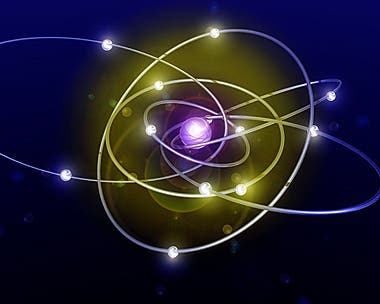
Quantum optical link sets new time records

From physorg.com

Image Source: physorg.com
Advice to young people interested in cutting-edge computing: take lots of physics! So many interesting physics news items... so little time to comprehend.
"Quantum communication could be an option for the absolutely secure transfer of data. The key component in quantum communication over long distances is the special phenomenon called entanglement between two atomic systems. Entanglement between two atomic systems is very fragile and up until now researchers have only been able to maintain the entanglement for a fraction of a second. But in new experiments at the Niels Bohr Institute researchers have succeeded in setting new records and maintaining the entanglement for up to an hour. The results are published in the scientific journal Physical Review Letters."

Monday, September 5, 2011

Researchers identify first flaws in the Advanced Encryption Standard

From Katholieke Universiteit Leuven

Image Source: edgetechcorp.com
A flaw in the AES sounds pretty scary, given that most of our online banking and other 'secure' network transactions rely on AES. But note the repercussions (esp. those of you who have been in Data Structures and Algorithms):
"To put this into perspective: on a trillion machines, that each could test a billion keys per second, it would take more than two billion years to recover an AES-128 key."
'via Blog this'

Sunday, September 4, 2011

Computational method predicts new uses for existing medicines

From National Institutes of Health (NIH)
Image Source: nccs.gov

An example of computation as a "fourth leg" of scientific research.
"For the first time ever, scientists are using computers and genomic information to predict new uses for existing medicines.

A National Institutes of Health-funded computational study analyzed genomic and drug data to predict new uses for medicines that are already on the market. A team led by Atul J. Butte, M.D., Ph.D., of Stanford University, Palo Alto, Calif., reports its results in two articles in the Aug. 17 online issue of Science Translational Medicine.

“Bringing a new drug to market typically takes about $1 billion, and many years of research and development,” said Rochelle M. Long, Ph.D., who directs the NIH Pharmacogenomics Research Network. “If we can find ways to repurpose drugs that are already approved, we could improve treatments and save both time and money.”
'via Blog this'

Friday, September 2, 2011

Nearby supernova found within 24 hours, thanks to computing

Image Source: Wikimedia Commons
From Wired.com

Where would modern astronomy be without computers to search through the torrent of data?
"The team from Lawrence Berkeley National Laboratory and University of California, Berkeley, credit the early detection to a specialized survey telescope at the Palomar Observatory in Southern California and advanced computing."

Monday, August 29, 2011

IBM's moves toward quantum computing

From Computerworld

Image Source: zmescience
IBM, one of the most patent-rich companies in the world, continues it's amazing pace of research and innovation. The future, they believe, is in a radically different paradigm of computing hardware (which will also require new thinking in software approaches as well).
"But the computing industry is moving to a new future as disruptive and as radical as the era that began with the introduction of silicon chips, and that future is quantum computing. These are systems that use the behavior of subatomic particles to conduct calculations now performed with transistors on a chip."

"An ordinary computer is a collection of bits that can either be a 0 or a 1. But quantum bits can hold those states, 0 and 1, simultaneously. Instead of doing a calculation one after the other, the processing power in a quantum computer can increase exponentially. Two quantum bits, or qubits, can hold four distinct states, which can be processed simultaneously, three qubits can hold eight and 10 qubits can hold 1,024 states. In time, researchers expect machines with thousands of qubits."

Friday, August 26, 2011

'Software is the Modern Language of Science'

From HPCwire

Computation, according to Nobel physics laureate Ken Wilson, has joined theory and experimentation as a "third leg" of scientific discovery (see Denning 2007, for example).

“We now have very small periods in time that are leading to very large changes in the amount of data, the amount of computation, and the amount of knowledge that is needed in order to carry out this kind of work,”
“...after more than four centuries of science being conducted at a painstakingly slow pace, today’s communications technologies and scientific advances are forcing a dramatic change–and acceleration–in all areas of science. At the heart of this change will be software.”
More recently, some have even been talking of a "fourth paradigm" -- the use of massive databases to discover new knowledge. For more see "The Fourth Paradigm," a series of essays published by Microsoft Research.

Wednesday, September 2, 2009

Microsoft Research Keeps Dreaming Big

Microsoft Research Keeps Dreaming Big - BusinessWeek: "Rick Rashid, head of Microsoft's (MSFT) research arm, oversees 850 of the brainiest people in the technology industry. But he doesn't push them to help the Microsoft groups working on the next Windows operating system or upcoming Xbox. Instead, he gives researchers wide leeway to pursue their own interests and write papers about ideas that may not pay off for 10 or 20 years—if at all. 'We're about doing things that frankly people may not want,' says the 57-year-old Rashid, tilting back in the desk chair in his modest office on Microsoft's Redmond (Wash.) campus. 'The point of a basic research group is really to do the things you don't know you'll need.'"